
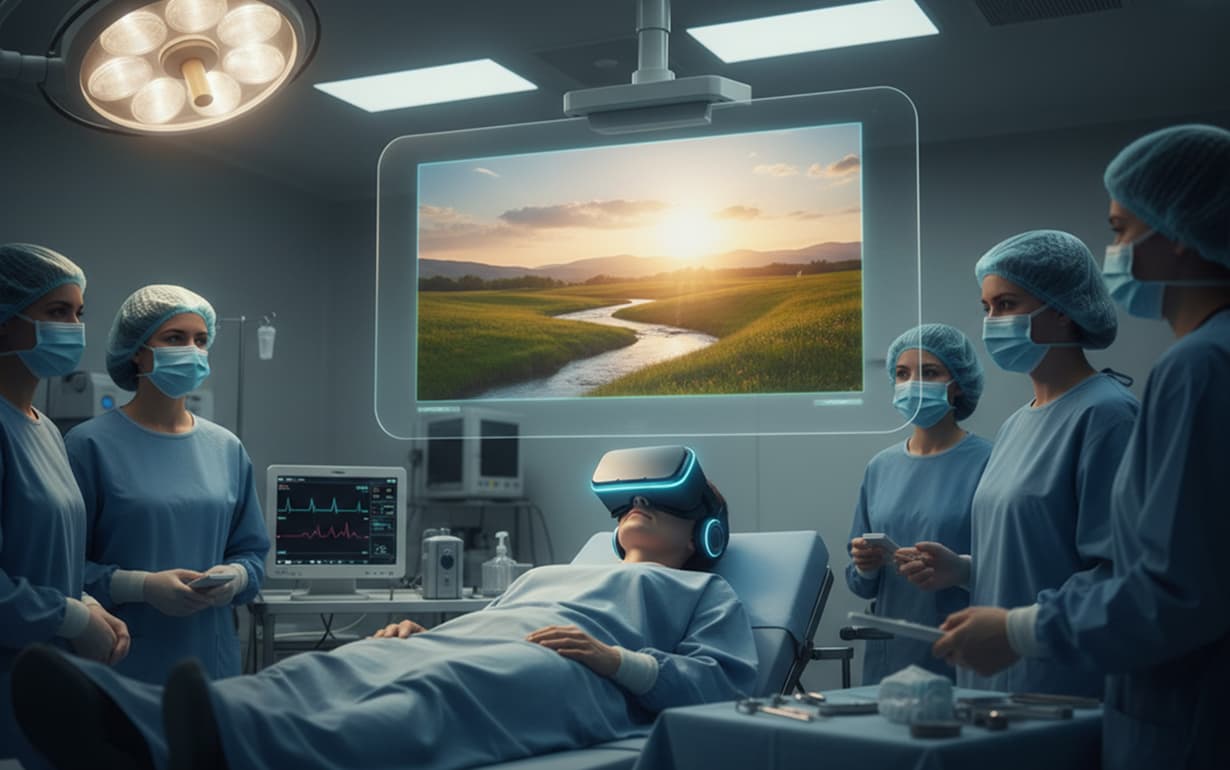
The use of virtual reality in healthcare is entering a phase of concrete application. A recent procedure at the Molinette hospital in Turin shows it: during a prostate operation, the patient was given a VR system that immersed them in a Caribbean setting, helping to reduce anxiety and stress and making the surgical experience calmer.
It is a real example of how immersive technologies can complement traditional medicine, creating a calmer, more controlled environment even in highly delicate situations.
Why VR works in clinical settings
Virtual reality allows the patient to:
- be distracted from the operation through immersive, relaxing scenarios;
- feel less stress, reducing the psychological impact of the procedure;
- maintain a higher level of comfort even during invasive or long procedures.
Numerous studies confirm that VR can reduce physiological arousal, anxiety and the perception of pain. The Molinette case is concrete confirmation.
The Techstar perspective
For Techstar, committed to developing immersive solutions, this kind of application is one of the most promising directions for virtual reality: a technology able not only to entertain or train, but also to improve the quality of the human experience in critical contexts.
Let’s look at three areas of great potential:
- Stress reduction in the operating room and during invasive exams through customizable VR environments.
- Support for telemedicine with immersive experiences that bring patients and doctors closer, even remotely.
- Advanced medical training through high-fidelity interactive simulations.
Conclusion
The Turin case shows that VR and healthcare no longer belong to the future but to the present: the technology is already able to improve procedures and clinical pathways.
For organizations like Techstar, it means continuing to invest in immersive solutions with high human impact, bringing innovation where it can truly make a difference: in people’s lives.